
Three kinds of radio systems
Analog radio
Conventional FM radio in VHF and UHF. Simple, affordable and still the right fit for many businesses, schools and facilities. Analog radio
DMR radio
Digital radio that carries two conversations on one 12.5 kHz channel, with clearer audio, text and GPS. Common in business, industry and public works. DMR radio
P25 radio
The digital standard for public safety, conventional or trunked, with interoperability between agencies and optional encryption. P25 radio
Repeaters and infrastructure
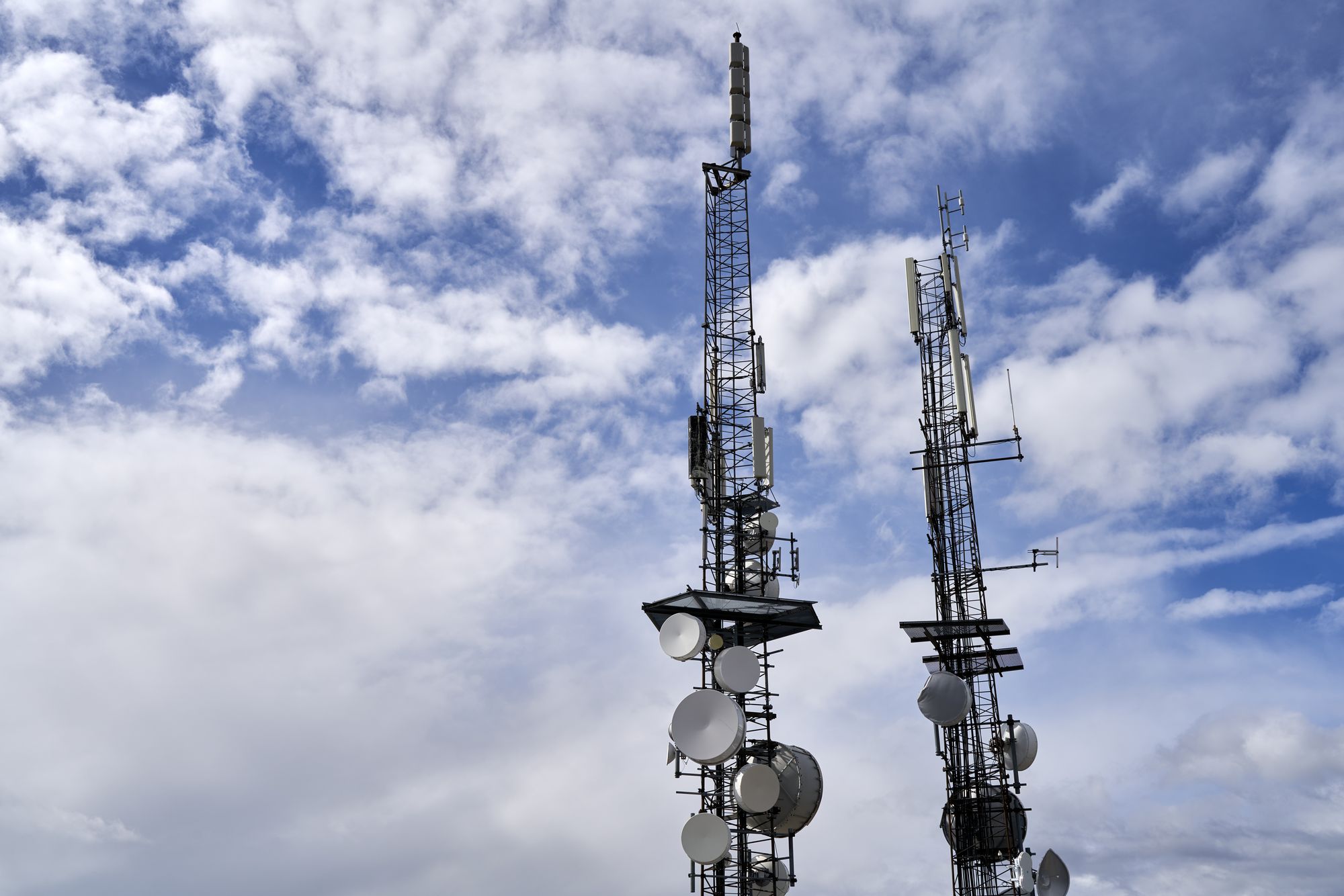
Most radio systems rely on a repeater: a receiver and transmitter, usually on a tower or rooftop, that picks up a weak signal from a handheld radio and rebroadcasts it at higher power. A repeater can turn a range of a mile or two into coverage across a town or county.
We install and maintain the equipment around it too.
- Repeaters and base stations
- Duplexers, combiners and filters
- Antennas, feed lines and grounding
- Multi-site links and voting receivers
- Dispatch consoles and control stations
Frequency bands
- VHF (136–174 MHz): travels well over open and rural terrain
- UHF (380–512 MHz): better inside buildings and in built-up areas
- 700 and 800 MHz: public safety bands, mostly used by P25 systems
We help choose the band and coordinate the FCC license.
Our radio services
- System design and coverage: planning a new system or an expansion
- Maintenance: scheduled inspections, repairs and yearly reports
- Training: classes for users, dispatchers and technicians
- Support: on-call help, programming and encryption keys
Equipment we're trained on
Our technicians are trained on the major radio manufacturers' P25, DMR and NXDN equipment:
- L3Harris: P25
- Motorola Solutions: P25 and DMR (MOTOTRBO)
- Tait: P25 and DMR
- Kenwood: P25, DMR and NXDN
Not sure what kind of system you need? We'll look at what you have first. Call 484-341-KATA or send us a request.